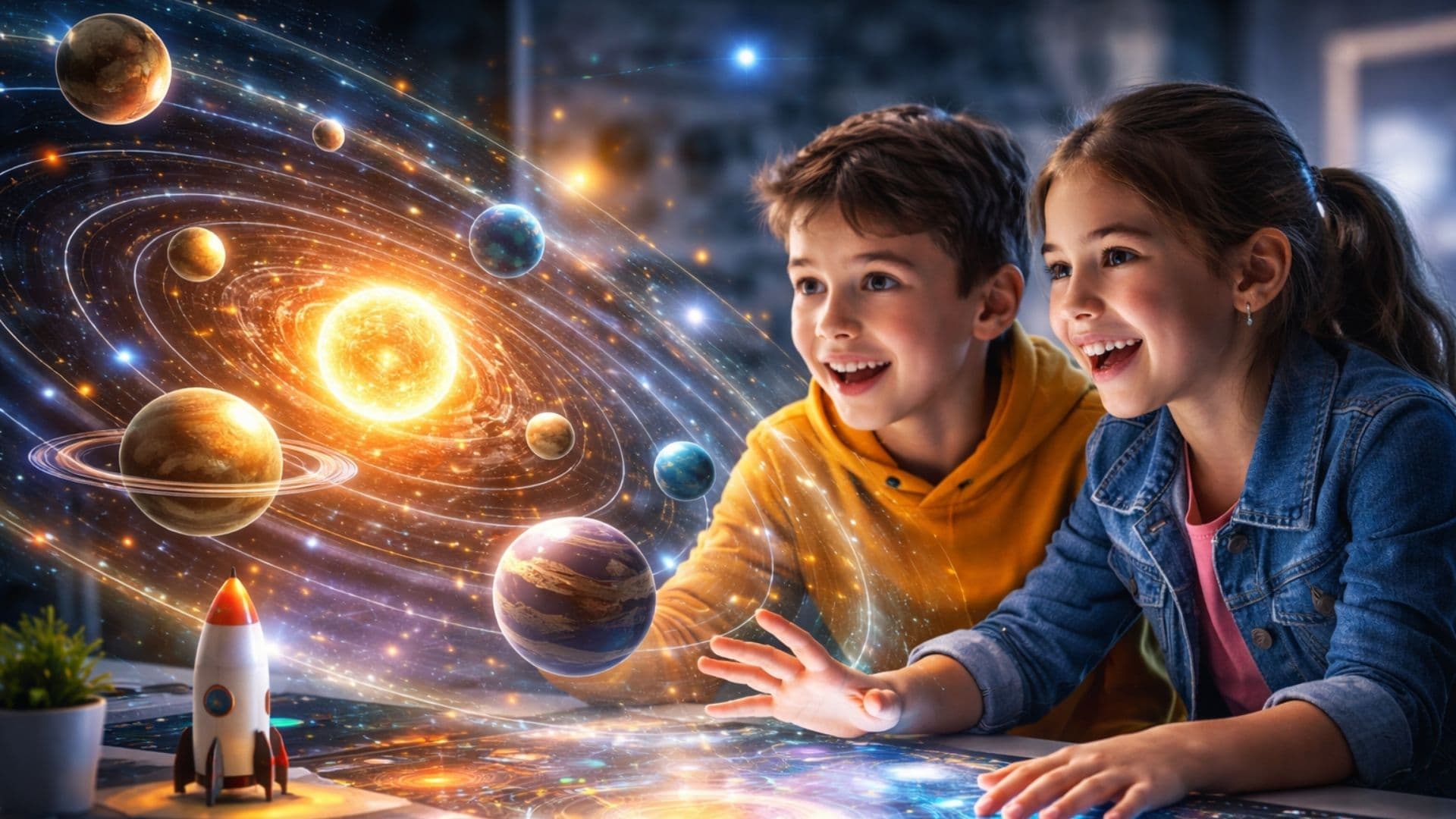
When children look at the sky, they often ask questions like “What is beyond Earth?” or “How are the planets arranged?” These questions reflect their natural curiosity about space.
The Solar System is a perfect starting point to turn this curiosity into meaningful learning. However, it must be explained in a way that is both simple and scientifically accurate.
What Is the Solar System?
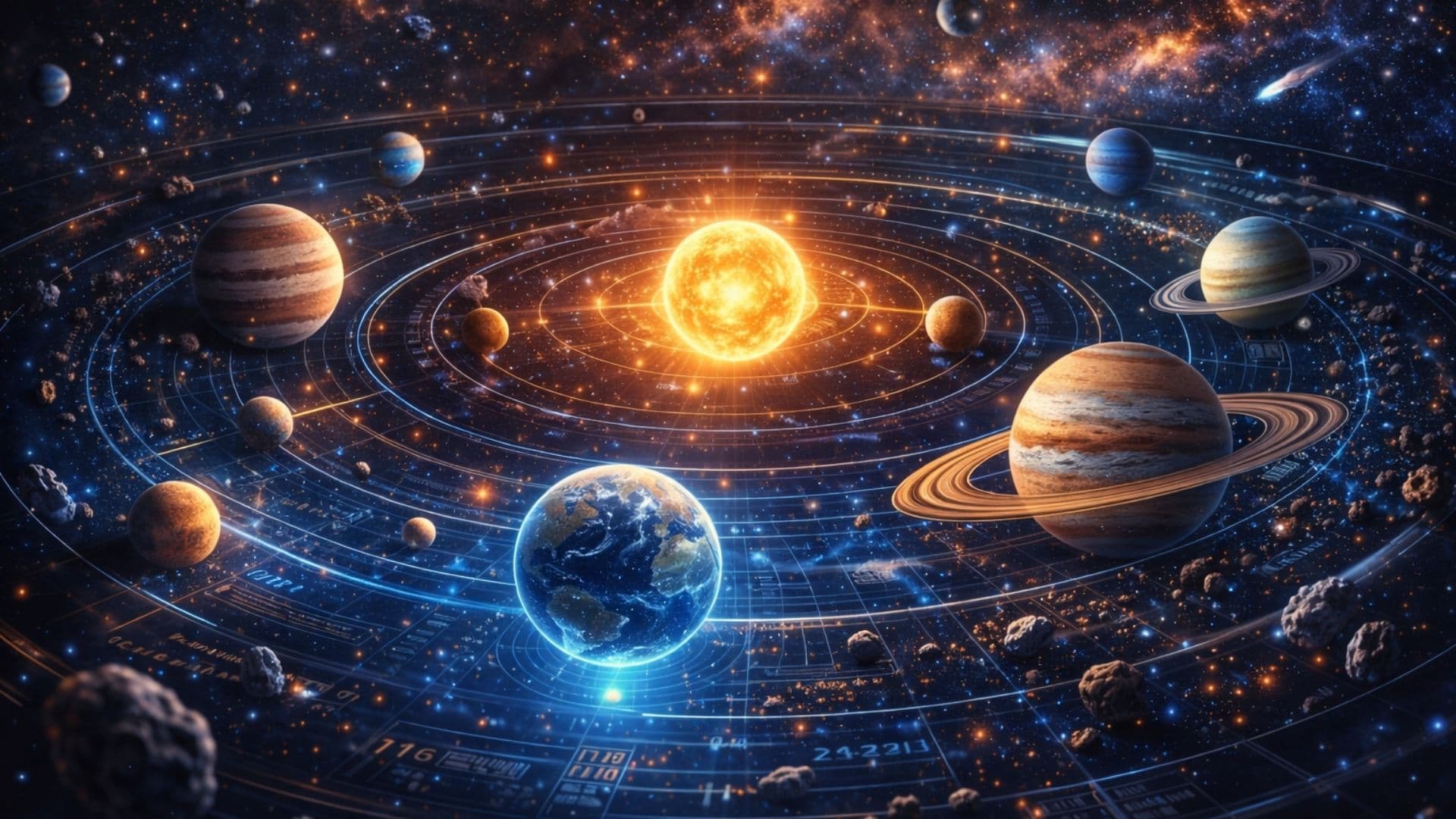
The Solar System consists of the Sun and everything that orbits around it.
- The Sun (at the center)
- Planets
- Moons
- Asteroids and comets
✔️ All these objects are held together by the Sun’s gravity
A simple way to explain it to children:
The Solar System is a big space family revolving around the Sun.
How Did the Solar System Form?
Scientists believe the Solar System formed about 4.6 billion years ago.
- A massive cloud of gas and dust existed
- It began to collapse
- The Sun formed at the center
- Remaining material became planets
❗ Explaining this process simply helps children understand better
Planets and Their Order
There are 8 planets in the Solar System, ordered by their distance from the Sun:
- Mercury
- Venus
- Earth
- Mars
- Jupiter
- Saturn
- Uranus
- Neptune
✔️ This order helps children understand the system clearly
Key Characteristics of the Planets
Each planet has unique features. Focus on simple differences when teaching children.
- Mercury: Closest to the Sun
- Venus: Extremely hot
- Earth: The only known planet with life
- Mars: Known as the Red Planet
- Jupiter: The largest planet
- Saturn: Famous for its rings
- Uranus: Rotates on its side
- Neptune: Very cold and far away
✔️ This approach makes learning easier and more memorable
The Role of the Sun
The Sun is the center and most important part of the Solar System.
- It provides light and heat
- It keeps planets in orbit
- It supports life on Earth
✔️ Without the Sun, the Solar System would not exist
How Should the Solar System Be Taught to Children?
The method of teaching is as important as the content.
Use Simple Language
Avoid complex scientific terms.
Support with Visuals
Planet images help understanding.
Use Storytelling
Present the Solar System as a space adventure.
✔️ These methods make learning more engaging
Avoid Common Mistakes
Some common mistakes should be avoided when teaching children.
❗ Presenting all planets as similar
❗ Giving too much detail
❗ Using incorrect or exaggerated information
Clear and accurate explanations are always more effective.
Conclusion: The Power of Simple and Accurate Teaching
The Solar System is one of the most fascinating topics for introducing children to science. However, balance is key.
✔️ Keep it simple
✔️ Keep it accurate
✔️ Keep it engaging
When these elements come together, children do not just learn—they begin to explore and question the world around them.
Share this article